.jpg)
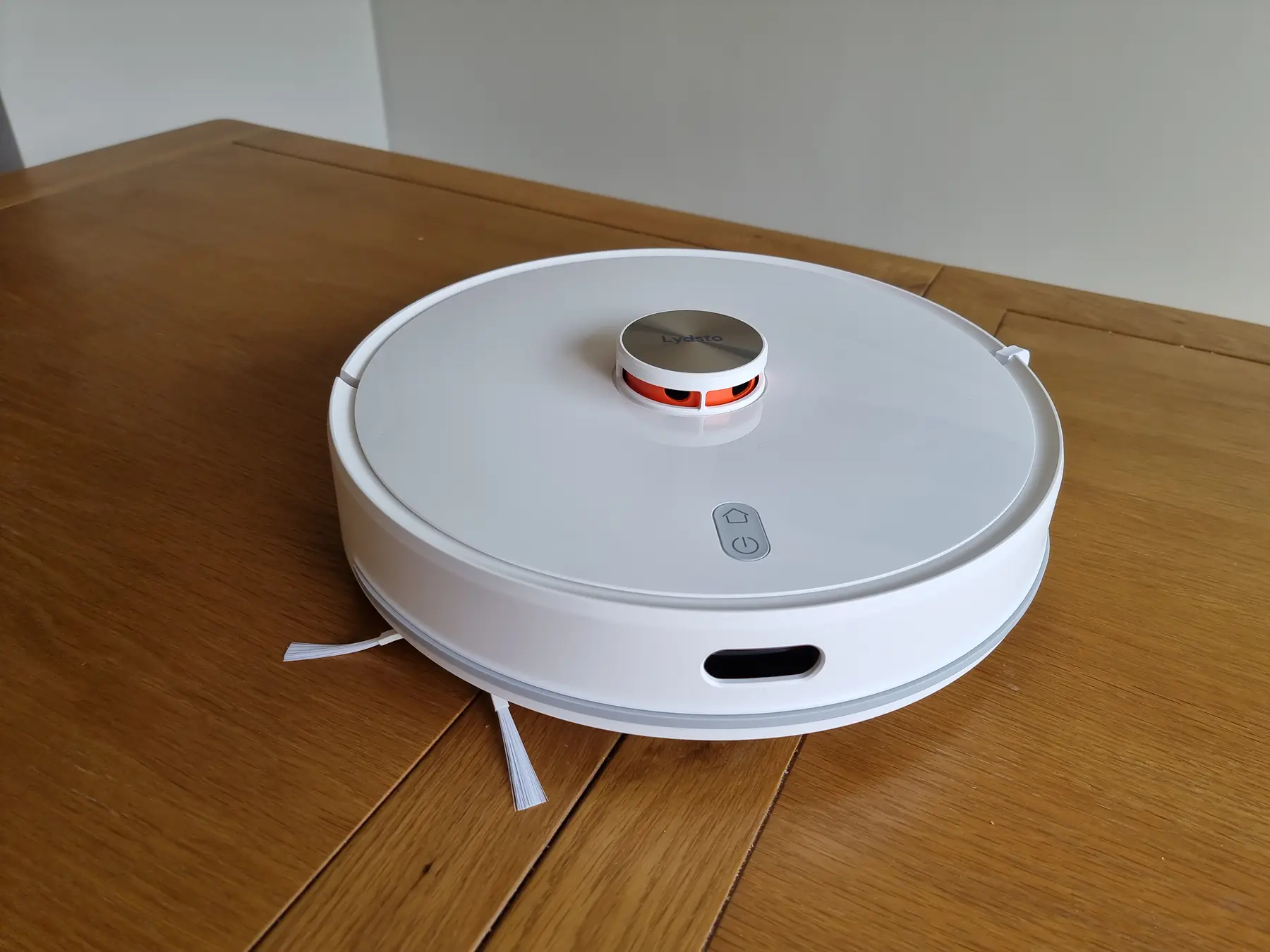
An unverified X post describes a premium robot vacuum entering a corporate network through a facilities purchase and only later acquiring security, legal, procurement and asset-management controls. Its joke is that the cleaner eventually becomes a medium-severity monitored endpoint.
The original link and facts still need verification. Even so, it captures a recognised governance failure: an organisation can buy a computer through its facilities budget, connect it through a consumer app and discover it only when the network complains.
For a police station, control room, custody suite or other security-sensitive site, that is an operational-security failure. Any connectable device that can sense, store, transmit or be remotely administered should enter as a managed technology asset, whatever it cleans, boils, illuminates, cools or waters.
A mobile device with a cloud-connected camera or microphone should normally be excluded from operationally sensitive rooms.
Elsewhere, the force should choose the least capable device that can do the job and control the remaining risk before it crosses the threshold.
A cleaner with a second job
If an intruder wanted a low-notice indoor reconnaissance platform, some premium vacuums combine several useful features: movement, mapping, optical or acoustic sensors, Wi-Fi and external data flows. Their routine presence attracts little curiosity. The analogy is powerful, but it can outrun the evidence.
“Robot vacuum” is a product category, not a technical specification. Some models use LiDAR; some use cameras or structured light; some support live video, two-way audio or remote driving; some create only a simple two-dimensional floor plan. Others have none of those features. Mesh networking is not a standard robot-vacuum capability. Vacuuming is not silent. Network availability does not prove continuous recording.
Keep the argument strong by keeping it accurate
- “It makes 3D scans”
- Certain models create 3D representations of room layout and furniture; many create only 2D cleaning maps. These are not survey-grade scans.
- “It has a camera and microphone”
- Some premium models do. Establish the exact sensors and remote functions for the model and firmware in use.
- “It provides 24/7 surveillance”
- A docked, network-reachable robot can leave a remotely accessible sensor platform inside the building. Continuous covert recording is not the demonstrated default.
- “It runs silently”
- Cleaning is audible. The defensible concern is unattended, routine and comparatively unobtrusive movement.
- “It forms a mesh network”
- Most models use Wi-Fi and sometimes Bluetooth. Do not claim mesh capability without model-specific evidence.
- “It uploads everything”
- Connected functions communicate with supplier-controlled services. Establish what leaves, where it goes, its retention and who can retrieve it.
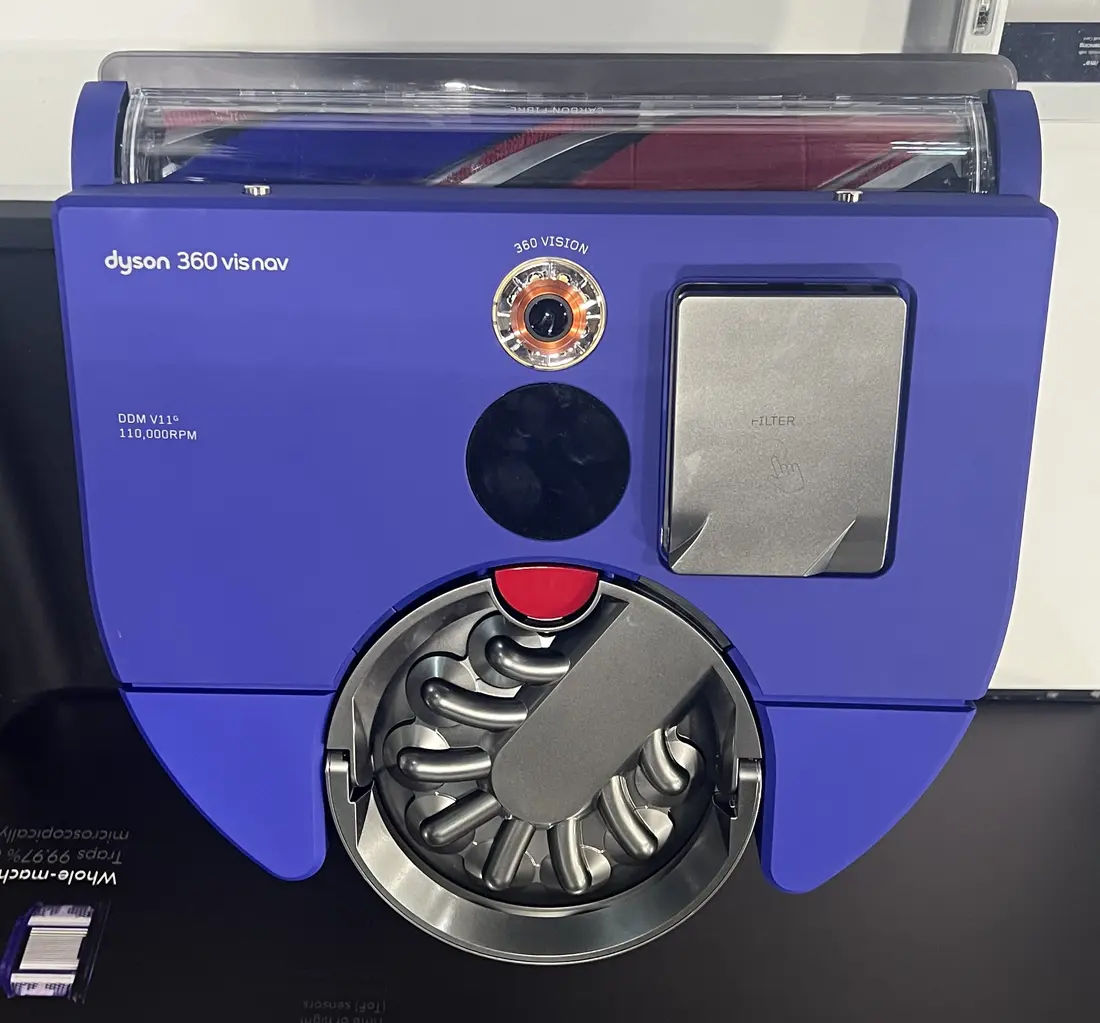
That narrower claim is still serious. ECOVACS documents models that can be remotely driven, sent to a selected point on a stored map and instructed to patrol while taking images. Roborock documents remote viewing, map access, control and audio on a particular model. These are supplier-described functions, not allegations of secret behaviour (ECOVACS Video Manager; Roborock remote viewing).
iRobot describes maps as sensitive information and says connected products communicate with its cloud, with data encrypted in transit and at rest. That proves a data flow and records vendor-stated safeguards; it does not prove insecurity (iRobot data security).
Researchers using authorised account material nevertheless recovered mission histories, navigation data, maps, detected-object labels and encrypted image captures from one Roomba J-series account. The study shows how evidentially rich a cleaning account can be, not open access to every Roomba (peer-reviewed article).
Capability becomes exposure
The threat is not that every vacuum is spying. The operational inference is narrower: a dual-use sensor platform can be misconfigured, compromised or placed where its legitimate functions collect material the organisation would not knowingly disclose.
Plausible site-specific exposures include maps showing doors, room boundaries and furniture changes; histories suggesting when rooms are accessible; cameras capturing screens, documents, evidence or access-control arrangements; microphones near conversations; and telemetry that discloses routines.
Those consequences depend on placement and use. A map of an empty public reception is not equivalent to a map of an intelligence office. A food-facing fridge camera is not a room-surveillance camera. A connected plant pot may be only a moisture sensor. Good operational security resists both complacency and gadget panic; it assesses the sensor, data, location, connectivity and administrator together.
There is documented cause for scrutiny. In 2024, researchers compromised a specific ECOVACS Deebot X2 and, with the owner’s consent, demonstrated remote access to its camera and other data. ECOVACS later published fixed firmware. That does not establish that every deployed device was updated, and it is not proof that all robot vacuums are compromised (ABC investigation; ECOVACS security advisory).
Academic work has shown that LiDAR can be repurposed as an audio side channel by detecting vibrations in nearby objects. The experiment required prior compromise, deliberate positioning, raw sensor extraction and particular reflective objects; it did not show ordinary vacuums routinely recording conversations (LidarPhone paper).
The National Cyber Security Centre assesses that enterprise connected devices expand the attack surface and can be used as a foothold or pivot into corporate networks. Its examples include mundane objects such as connected kettles and refrigerators, because product appearance tells us little about network consequence (NCSC assessment).
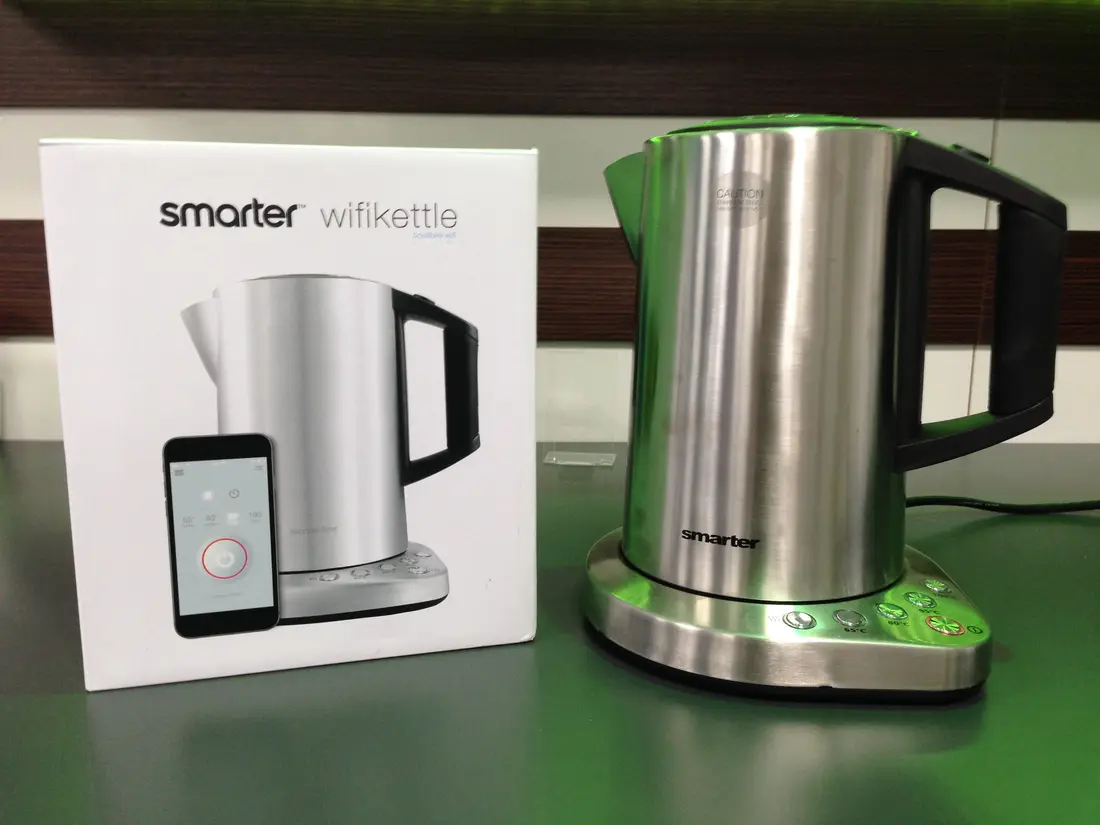
Other devices illustrate different paths. A patched 2020 Philips Hue flaw showed a smart bulb attacking its bridge and then the IP network. A 2015 assessment of one smart kettle found that it could expose a Wi-Fi key nearby. Current smart glasses openly combine an eye-level camera, microphones, voice-activated recording and rapid sharing (Hue research; iKettle research; smart-glasses specifications).
They show three recurring pathways: direct collection, credential exposure and network pivoting—not a blacklist of brands.
The purchasing gap is the vulnerability
Established IT procurement processes can miss products bought by Estates, Facilities, Communications, contractors or individual teams because their primary purpose is not “computing”. They may arrive with a mobile app, an employee-owned cloud account, an undocumented support period and a request for the Wi-Fi password.
Before a connected device is purchased or allowed onto a site, four questions need named answers:
- What can it sense?Record every camera, microphone, ranging sensor, identifier and derived map—not merely the feature used on day one.
- Where does the information go?Document local storage, cloud destinations, subprocessors, retention, support access and deletion routes.
- Who can administer it?Identify the owner, account holders, authentication, updates, remote access and the leaver process.
- What can it reach?Establish radios, required services, outbound destinations, nearby systems and the consequence of compromise.
A statement of compliance and the PSTI baseline do not answer those questions. The UK regime has applied to relevant consumer connectable products since 29 April 2024 and sets requirements for passwords, vulnerability reporting and publication of a minimum security-update period. It is a consumer-product floor, not police-site accreditation (PSTI regime; Schedule 1 requirements).
Data protection requires separate attention. A Facilities cleaner does not automatically become law-enforcement processing because a police force owns it; the regime follows the purpose. Screen every deployment and complete a data protection impact assessment before processing likely to create a high risk to individuals’ rights and freedoms (ICO scope guidance; ICO DPIA guidance).
Policing sits within the Emergency Services national-infrastructure sector, but that does not make every police station—or every device inside one—Critical National Infrastructure. The control should follow the consequence of losing or compromising the particular room, function, data and network (NPSA definition and sectors).
A proportionate rule for connected premises
A blanket ban can discard useful automation and encourage unofficial devices. Treating every product as an ordinary appliance leaves the sensing, cloud and network risks unmanaged. This article proposes a tiered policy.
Exclusion zones
No consumer cloud-connected device with cameras, microphones, mobile mapping or remote viewing should enter locally designated sensitive zones without a documented exception from the relevant information-risk authority. Closed doors or physical barriers should enforce boundaries.
Controlled general areas
Prefer an offline, camera-free and microphone-free model. If connectivity is essential, approve the hardware and firmware, disable verified configurable functions, use an organisation-owned account and place it in a monitored low-trust zone.
Lower-consequence areas
Staff kitchens and similar spaces may justify lighter controls, but not invisibility. The device still needs an owner, inventory record, supported software, restricted credentials and an end-of-life plan.
Segmentation reduces lateral movement but does not solve cloud-account compromise, supplier access or inappropriate collection inside the room. The NCSC recommends understanding sensors and suppliers, designing zones of trust, constraining network services, monitoring endpoints and planning decommissioning (NCSC connected-place principles).
Before the next device joins the shift
The locally designated cyber-security or information-risk authority and Head of Estates should jointly issue one rule: no connectable facilities device is bought, installed or networked until it has a named owner, a capability and data-flow assessment, a support end date, an approved location and a disposal route.
- Reconcile network discovery with procurement records, contractor equipment and local asset lists.
- Triage devices by sensing capability, room consequence and network reach.
- Use connected-device zones with outbound allow-lists, protected management interfaces and monitoring.
- Contract for data routes, retention, subprocessors, vulnerability notification, updates, access logs, deletion and exit.
- Set a force rule for smart glasses and other recording wearables in restricted spaces.
- At retirement, remove local and cloud data, revoke accounts and tokens, and close the asset record.
Useful measures include the proportion of devices with a named owner and support end date; unapproved sensing devices in exclusion zones; approved outbound destinations; time to triage an unknown endpoint; and available evidence of end-of-life deletion.
The operational failure is not that a vacuum cleaner was hacked. In the anecdote, there is no evidence that it was. The failure is that nobody had decided whether a roaming, sensing, remotely administered computer was allowed to be there until after it connected.
Facilities wanted the floor cleaned. Security wanted the site protected. Both can have what they need—provided the vacuum is treated as the computer it is.
From evidence to action
Evidence
NCSC assesses that connected devices enlarge attack surfaces. Model-specific documentation and research show that some premium vacuums combine mapping, cloud storage, remote movement, cameras or audio.
Understanding
The principal OPSEC failure is the governance gap that lets a connected sensor enter through facilities procurement without the questions routinely asked of an IT endpoint.
Options
Forces can prohibit smart devices, rely on consumer baselines, or use a tiered policy. Exclusion from sensitive zones and tightly controlled use elsewhere is the proportionate option.
Next steps
Information-risk and estates authorities should require pre-purchase registration, site zoning, supplier review, constrained connectivity, ownership, monitoring and deletion evidence.
Editorial review notes
- Obtain the original X post URL, author and date before publication.
- Validate the proposed room tiers and governance titles against local force policy.
- Have the Data Protection Officer review the UK GDPR and DPA framing.
- Recheck ICO guidance following the Data (Use and Access) Act 2025.
- Confirm product examples, firmware and supplier pages immediately before publication.